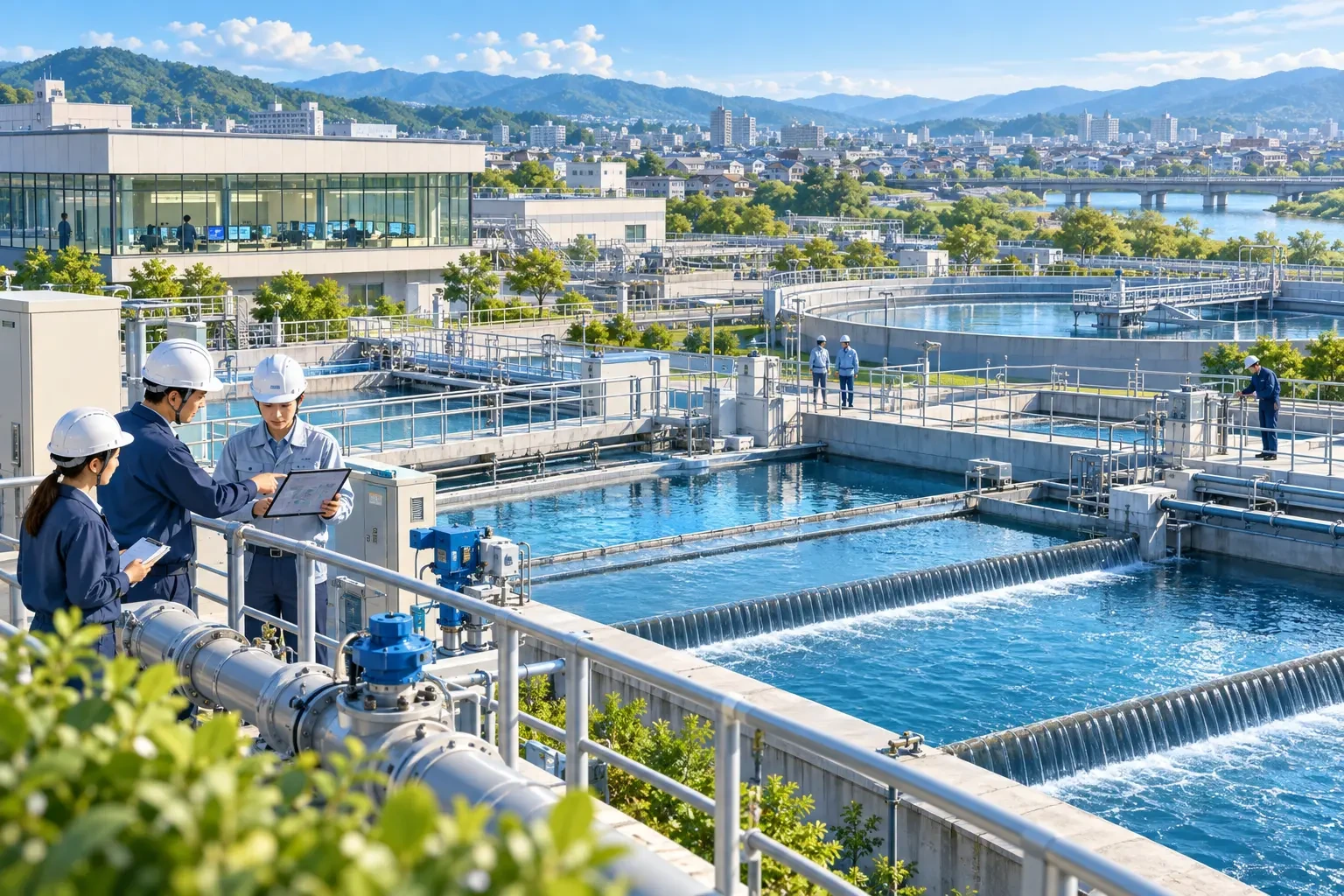
Bringing Water to the Desert, Keeping Power Plants Running: Torishima
Large pumps carry irrigation water to desert farmland in Egypt. In Taiwan, Torishima has received an order for seawater pumps for an LNG terminal. In Tokyo, it has received an order for sensors to monitor pumps and other equipment in district heating and cooling facilities. These are all Torishima's businesses: building equipment that moves large volumes of liquid and keeping it running for years. Can that expanding role deliver lasting profits?
Moving water, transferring heat, keeping facilities running
Irrigation systems, power stations and chemical plants all depend on moving large quantities of liquid safely and efficiently.
Torishima engineers large pumps for demanding pressure, temperature and corrosion conditions. Customers value reliable operation and low energy use. Repairs, replacement parts and retrofits create business long after delivery.
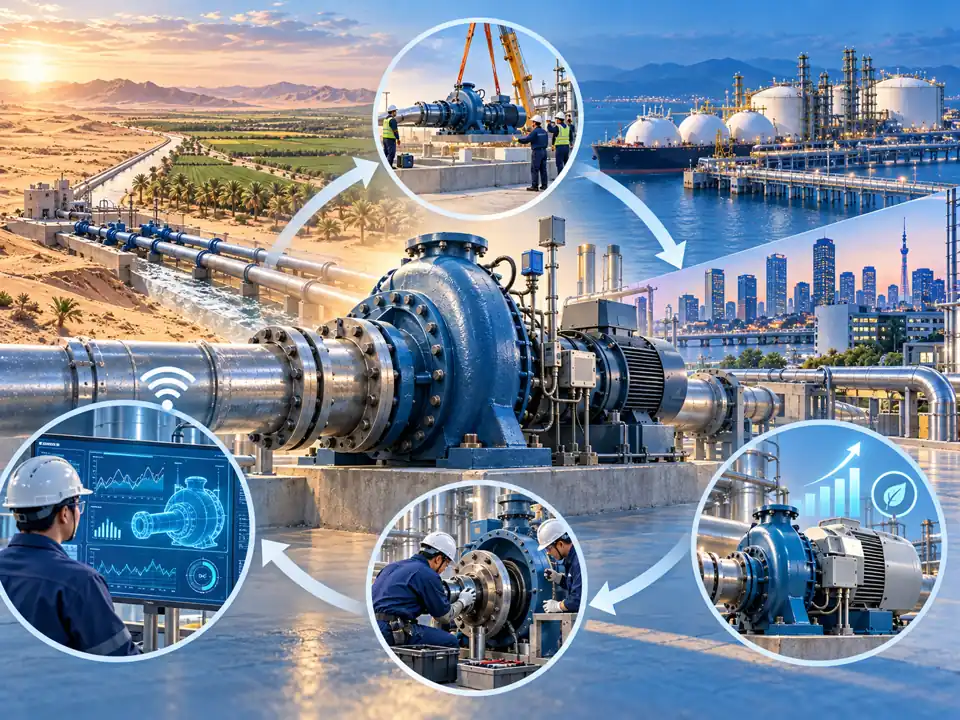
Projects in Egypt, Taiwan and Tokyo show the range
Africa is not the group's largest regional market. FY2025 Middle East sales were ¥24.8bn against ¥7.4bn in Africa. African new orders declined from ¥14.3bn in FY2023 to ¥1.9bn in FY2025, illustrating the uneven timing of major projects.
Can decades of equipment service become a business advantage?
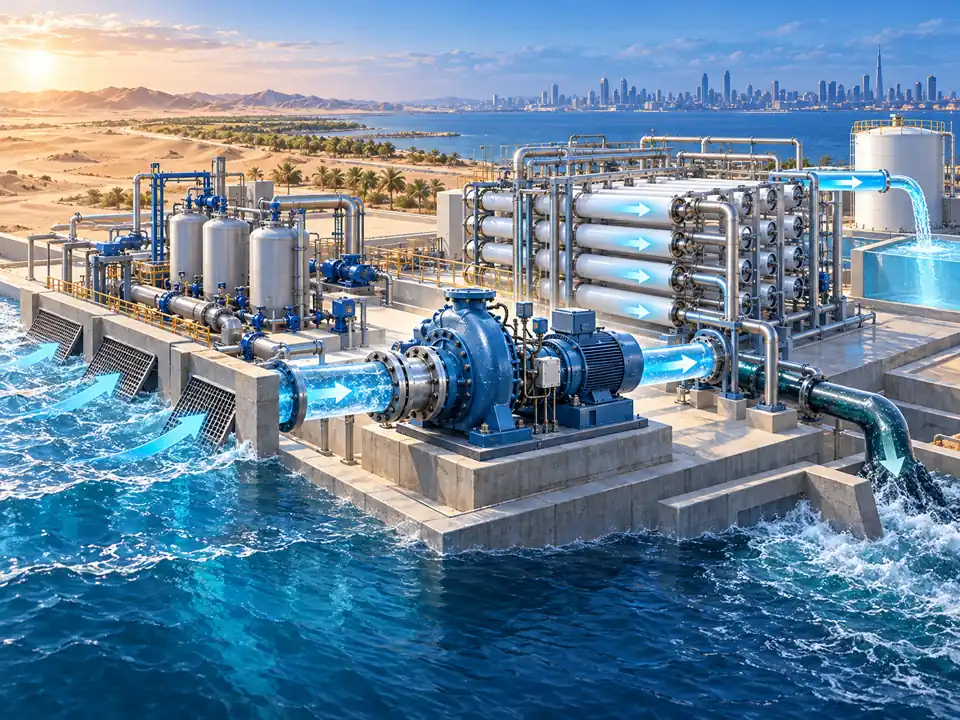
Torishima's distinctive strength lies in large, high-pressure pumps for seawater desalination. Reverse osmosis (RO) requires seawater to be pushed through extremely fine membranes at high pressure; energy efficiency and reliability matter. The company has served this field since the 1970s, and Japan's Ministry of Economy, Trade and Industry selected its desalination pumps for the 2020 Global Niche Top list. Its large-plant installation record is extensive.
Ebara also manufactures large high-pressure pumps and has projects carrying desalinated water to inland cities. There is no basis for ranking the companies' overall engineering capabilities. What sets Torishima apart is its established record and market position in the RO high-pressure seawater feed stage itself. International competition remains intense, making long-term maintenance of installed equipment another important opportunity.
Management sees service as a high-margin business, but its standalone margin is not sufficiently disclosed. Group operating margin fell from 8.4% in FY2023 to 5.4% in FY2025. Sustainable earnings remain the key test.
Industrial necessity is not guaranteed profit
- Contract margins: Materials and subcontractor costs can rise before delivery.
- Service profitability: Service revenue is rising, but its separate operating margin is not disclosed in enough detail to confirm how much it improves group earnings.
- Acquisition: Shin Nippon Machinery's pre-acquisition margin may not carry over after integration.
- Regions: Project financing and infrastructure budgets vary; irrigation depends on water availability.
- Competition: Global pump makers compete on specification, service and price.
Real installations and an unfinished margin recovery
Egypt 49 pumps, Taiwan ten ordered pumps, Tokyo 380 sensors, and ¥30bn service sales.
Parts, repairs, modernization and acquisition technology may expand the opportunity.
Production costs, service profitability and acquisition economics remain uncertain.
Track export margins and underlying acquisition returns.
What the next releases should establish
Export gross margin, group operating margin and backlog conversion.
Operating cash flow and acquisition returns excluding one-offs.
Compare orders and sales in service and key geographic markets.
At ¥2,597, what earnings power is the market valuing?
Oct. 23, 2026
An installed base and global service network matter—but their value depends on profits they can sustain.
At the October 23, 2026 close of ¥2,597, Torishima's equity was worth about ¥74.1bn. The P/B ratio was approximately 1.11x and the forward dividend yield roughly 2.62%. Its desalination and power-plant installation record and approximately ¥30bn in service sales provide a tangible business foundation.
Yet a large order book has not meant a high operating margin. The group margin fell from 8.4% in FY2023 to 5.4% in FY2025; the forecast for FY2026 is only 5.5%, on ¥103.9bn in sales and ¥5.7bn in operating profit. Backlog was ¥120.8bn at the end of June, before consolidation of the acquisition. At the forecast sales level, each one-percentage-point change in operating margin would represent roughly ¥1bn in annual operating profit. That is an illustration, not a forecast.
The quoted forward P/E of about 9.7x includes a one-off acquisition gain. Using Torishima's ¥5.2bn underlying net-income estimate gives an approximate P/E of 13x. Conversely, guidance of ¥5.7bn in operating profit includes only half a year of the acquired company. Neither headline figure alone captures recurring earnings power.
Three things will determine the quality of earnings: better manufacturing margins on export pumps, cash-generating aftersales service, and sustained profitability after integrating Shin Nippon Machinery. Sales at a 5% operating margin and sales at an 8% margin produce very different business economics, even before considering changes in demand.
Share and valuation data as of October 23, 2026. The one-percentage-point sensitivity assumes unchanged sales and is not guidance. Underlying net income of ¥5.2bn is a company measure; the resulting P/E is illustrative.
Sources
- FY2025 earnings presentation
- FY2026 Q1 results and financial reports
- Egypt New Delta project, May 2026
- FY2025 annual earnings release
- Acquisition and IR disclosures
- Share price history
- Ten pumps for Taiwan LNG terminal
- 380 condition-monitoring sensors in Tokyo
- Shin Nippon Machinery FY2025 financials
- FY2026 Q1 results presentation
- Desalination reference projects and Global Niche Top recognition
- Ebara's businesses and competitive strengths
- Ebara's high-capacity water transmission pump project
- Japan METI's 2020 Global Niche Top selection list
- Torishima FY2024 results Q&A on competition
- Shin Nippon Machinery acquisition rationale and historical earnings
Read next
Explore more companies through the same lens of social change and shareholder value.